Trip Report - China - Robotics, AI and the Future Here
This started out as a post and just got longer and longer — so expect raw thoughts over a research piece. It’s full of what some will consider hot takes. But here's the punchline:
- If China is a 10 in hardware manufacturing, the US is a 2.
- If the US is a 10 in software and AI, China feels like a 6 or 7.
That’s the oversimplified version. Of course, China also produced DeepSeek, and the US is the only country where two companies have landed reusable rockets. Nothing fits neatly into a single sentence — but on average, across many robotics companies, some startups, and a lot of conversations, this was my lived experience.
From X to On-Site
If you spend time on X, China + robotics + AI is the land of hyperbole. Someone’s going to dominate someone else next week. Either humanoids will take all the jobs by Friday or it’s all smoke and mirrors.
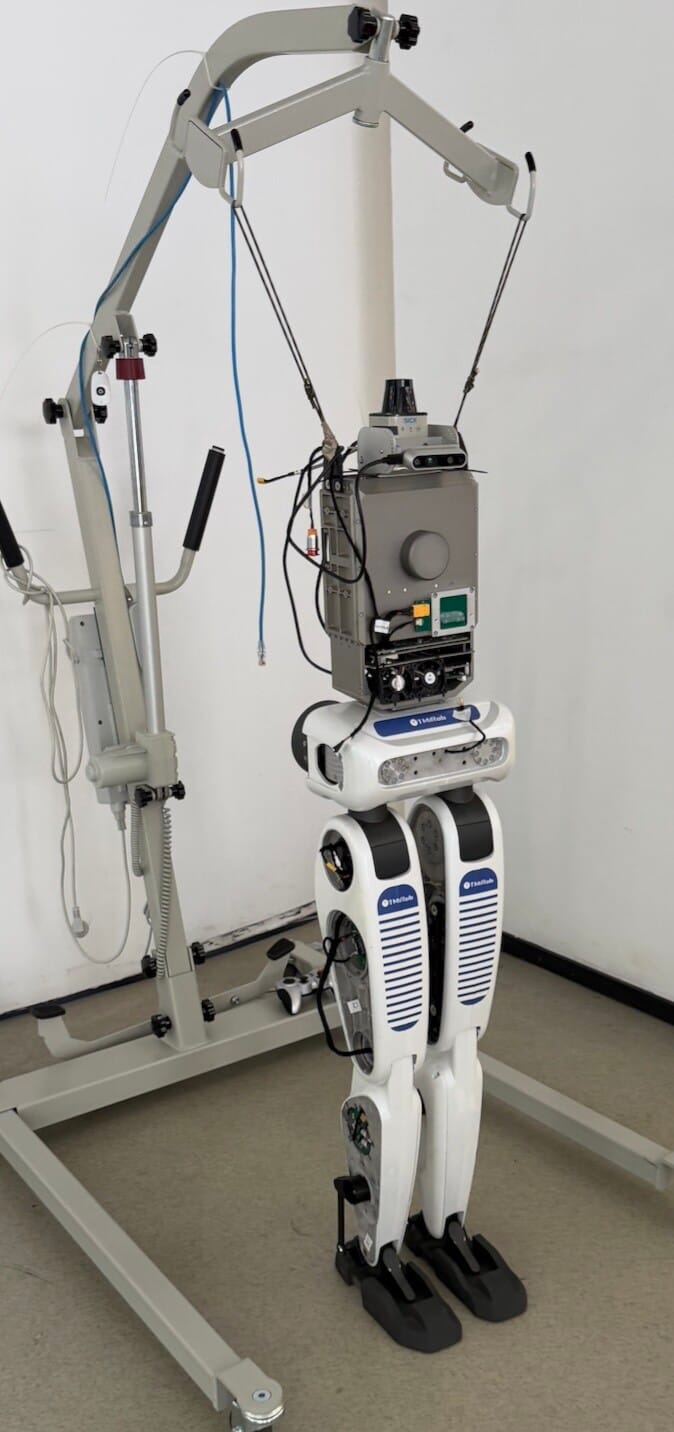
I wanted to cut through the hype, so I joined a trip to China and met with about 10 robotics companies — mostly mid-level teams, some founders, some scrappy startups with soldering irons everywhere and prototypes held together by hope and hot glue.
This piece isn’t about healthcare or @lookdeephealth (my world). It's about context — what’s actually happening on the ground.
And I’ll say this upfront: No week in China gives you a complete picture. But talking to the people building things, not the ones hyping them, is always refreshing.
And some of them definitely have not gotten the memo about what they’re supposedly capable of.
"Everyone" Knows Hardware
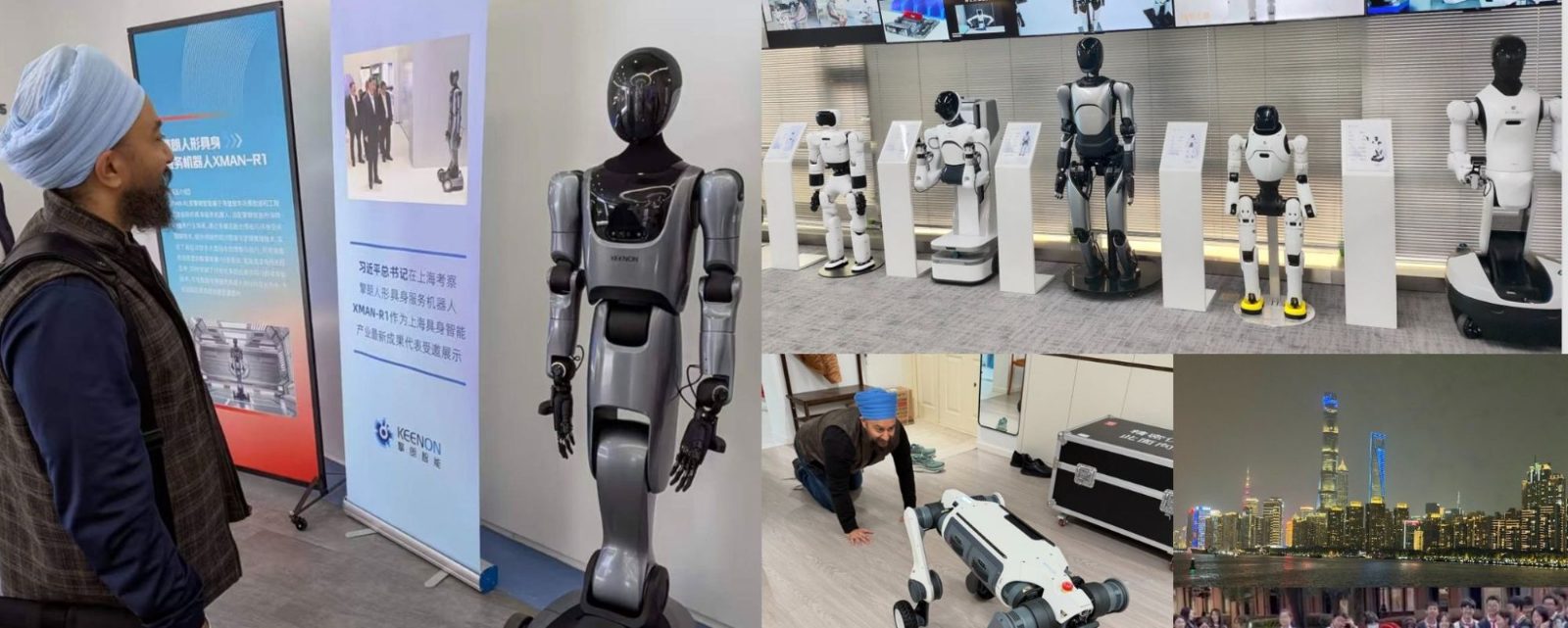
There are hundreds of humanoid projects in China. Not just the companies who say it’s their main focus — but companies that build vacuum robots, specialty medical equipment, last-mile delivery drones. All of them have a humanoid program in progress.
Certainly doesnt make sense in the American context - but it signals something culturally and structurally important. Hardware seems like second nature. You see it in the choices they make — sometimes in hilariously overbuilt ways.
One medical company showed a six-foot-tall screen with a famous doctor avatar who speaks to patients via prerecorded scripts or weak AI. It had a custom hardware microphone array that cleverly only captured sound from dead-center and a built-in scale at the base.
Cool, but felt like something to be coded in a web ui in a few hours. But hardware is in their bones, so they reach for it.
The Supply Chain Changes Everything
One local partner casually said:
“If you wanted to launch a new self-driving EV in six months here, we could do it. Just need the capital.”
I clearly don’t even want an EV company, but it didn’t feel like bravado.
He meant it literally: The parts, components, subcomponents, assembly service — everything — are available, cheap, interchangeable, and a phone call away.
In the US, we treat hardware like handling plutonium. In China, it’s Tuesday.
That accessibility tilts the entire innovation curve.
Robots: The Demos vs. The Conversations
Here’s where the dichotomy gets insane.
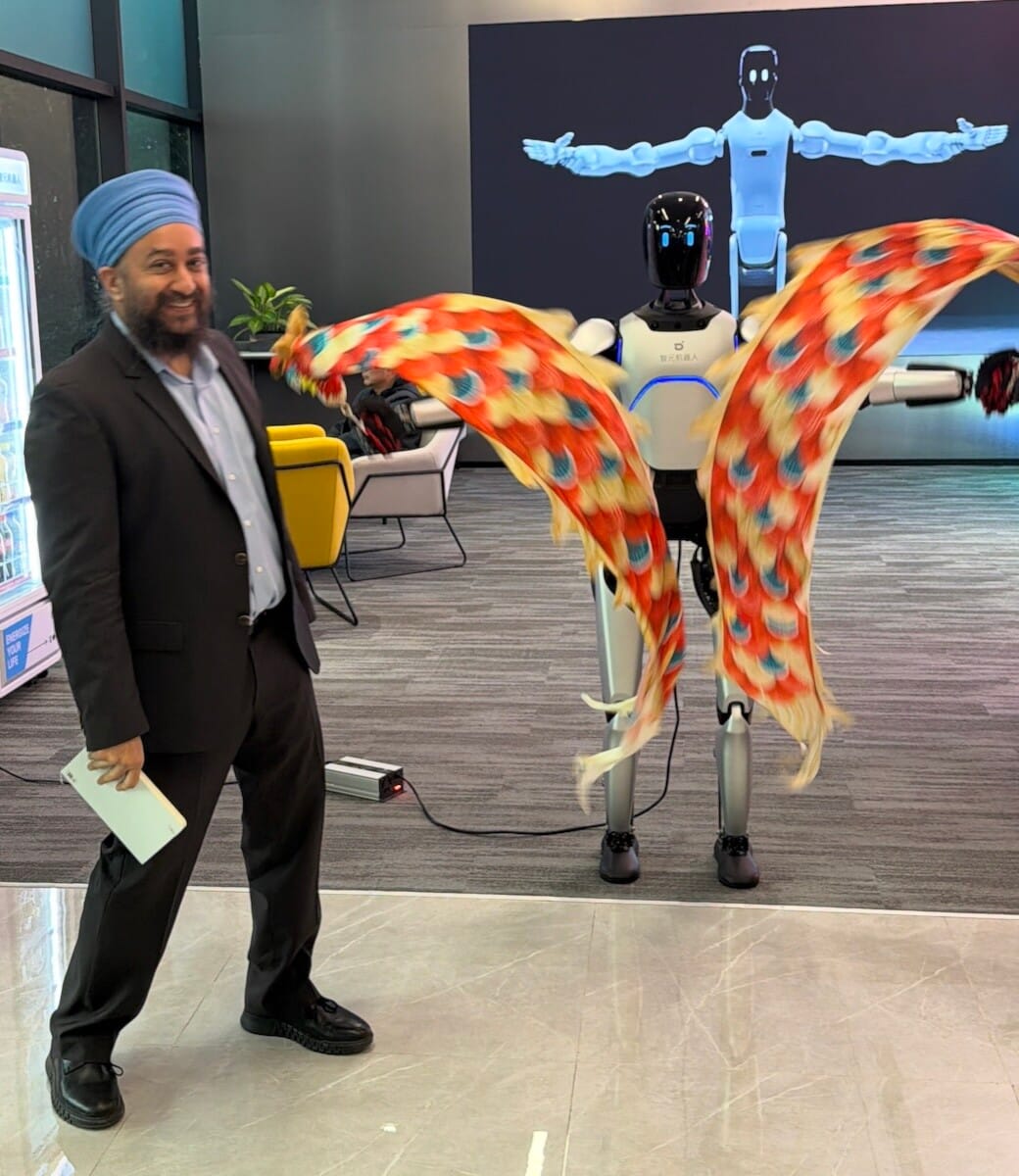
You see demos — like MindOn’s recent one — and your jaw hits the floor. Then you talk to actual robots from big-name humanoid players and… the interaction is mediocre. Worse than basic AI agents deployed in US enterprises today.
China has Qwen, DeepSeek, plenty of strong local models. Yet what many robots actually run feels like GPT-2.5 with a sore throat.
Why?
One explanation we heard repeatedly:
internal competition is intense. Provinces, sectors, even teams inside companies avoid using each other’s work.
It sounds absurd to US ears — but in China its reminiscent of 2010s bike-share wars (Ofo vs. Hellobike vs. Mobike) and suggests it’s very possible.
This pattern repeated everywhere: stunning hardware, basic software.
The Physical Stuff Feels Like Magic
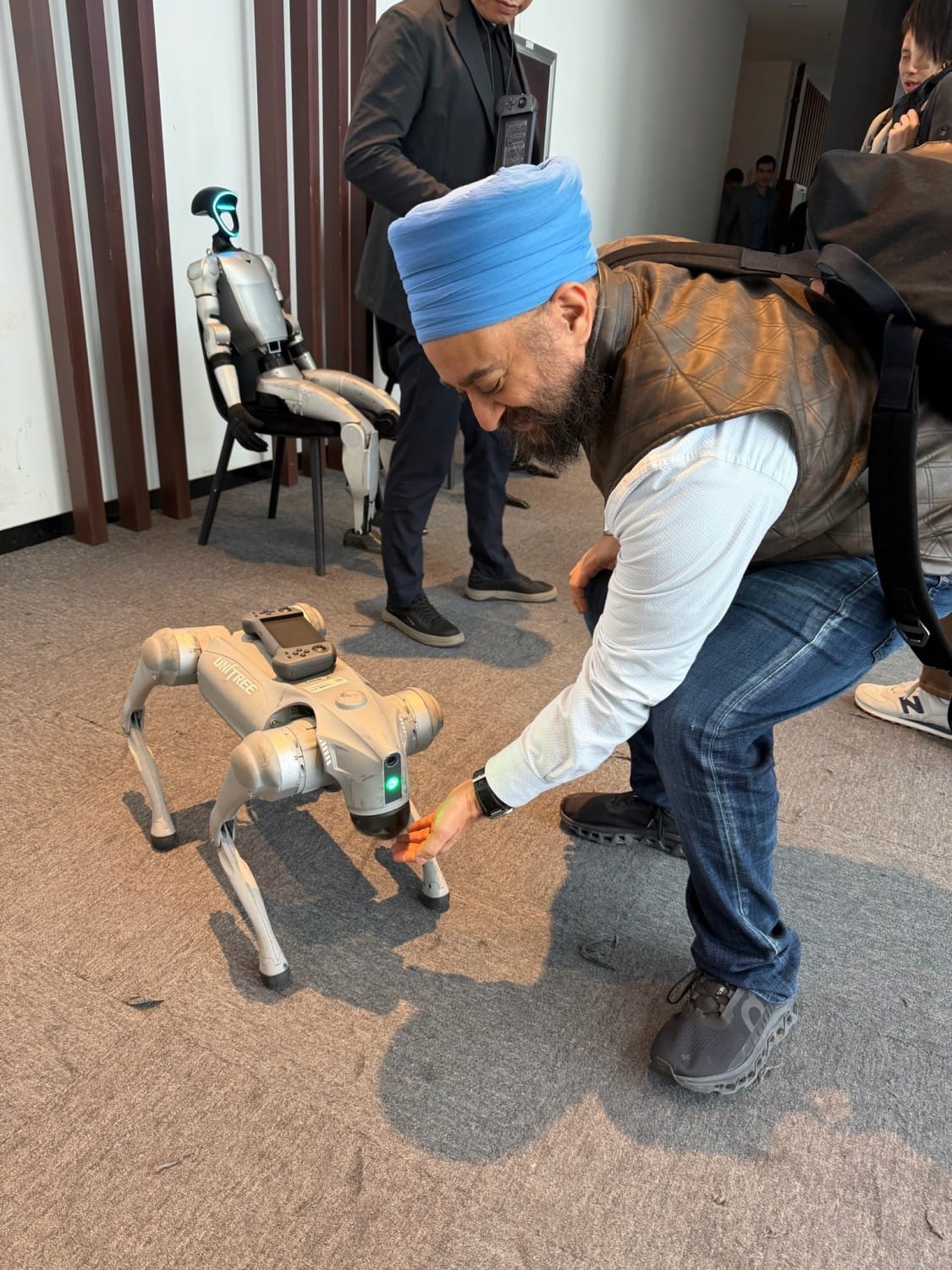
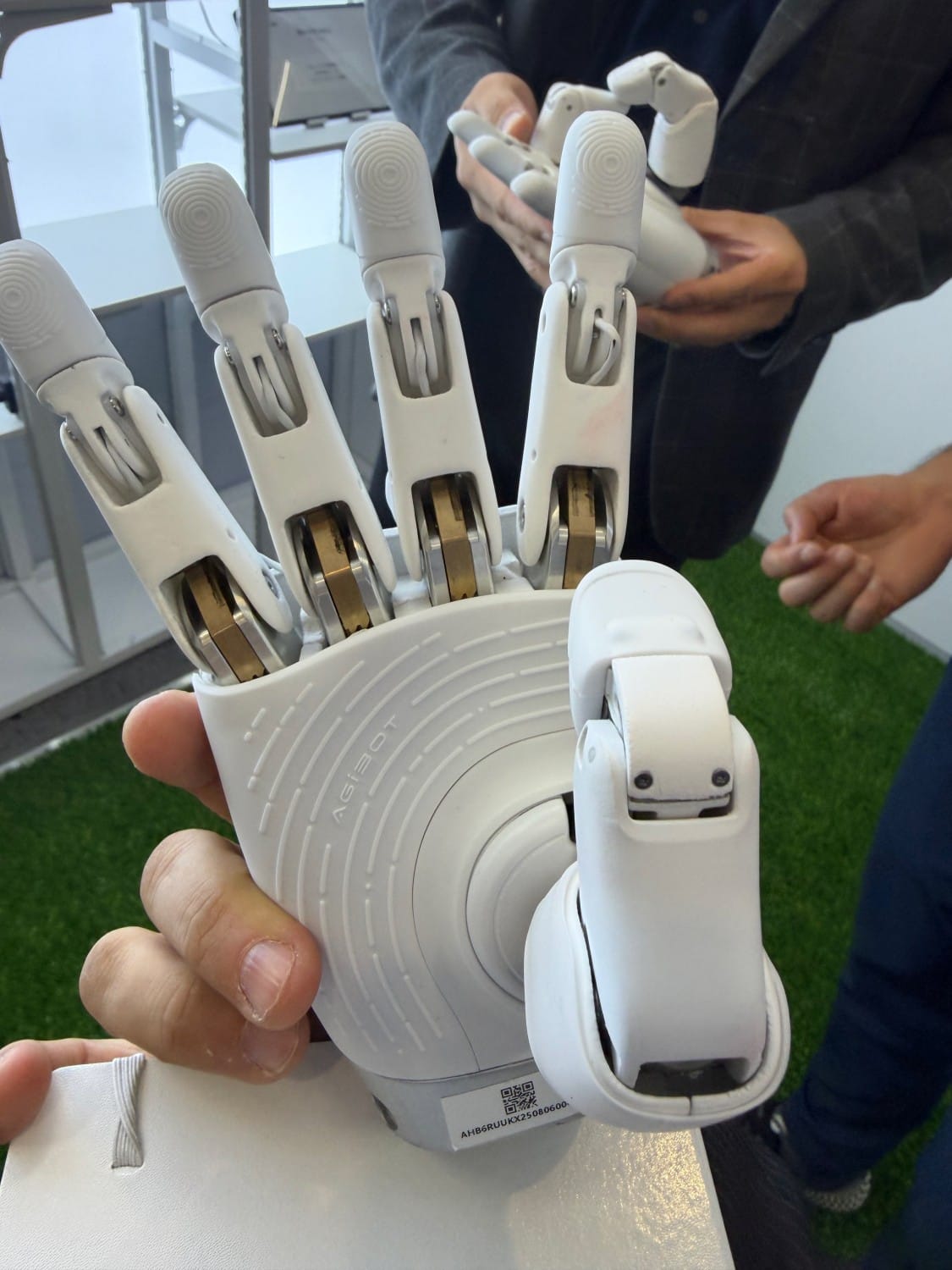
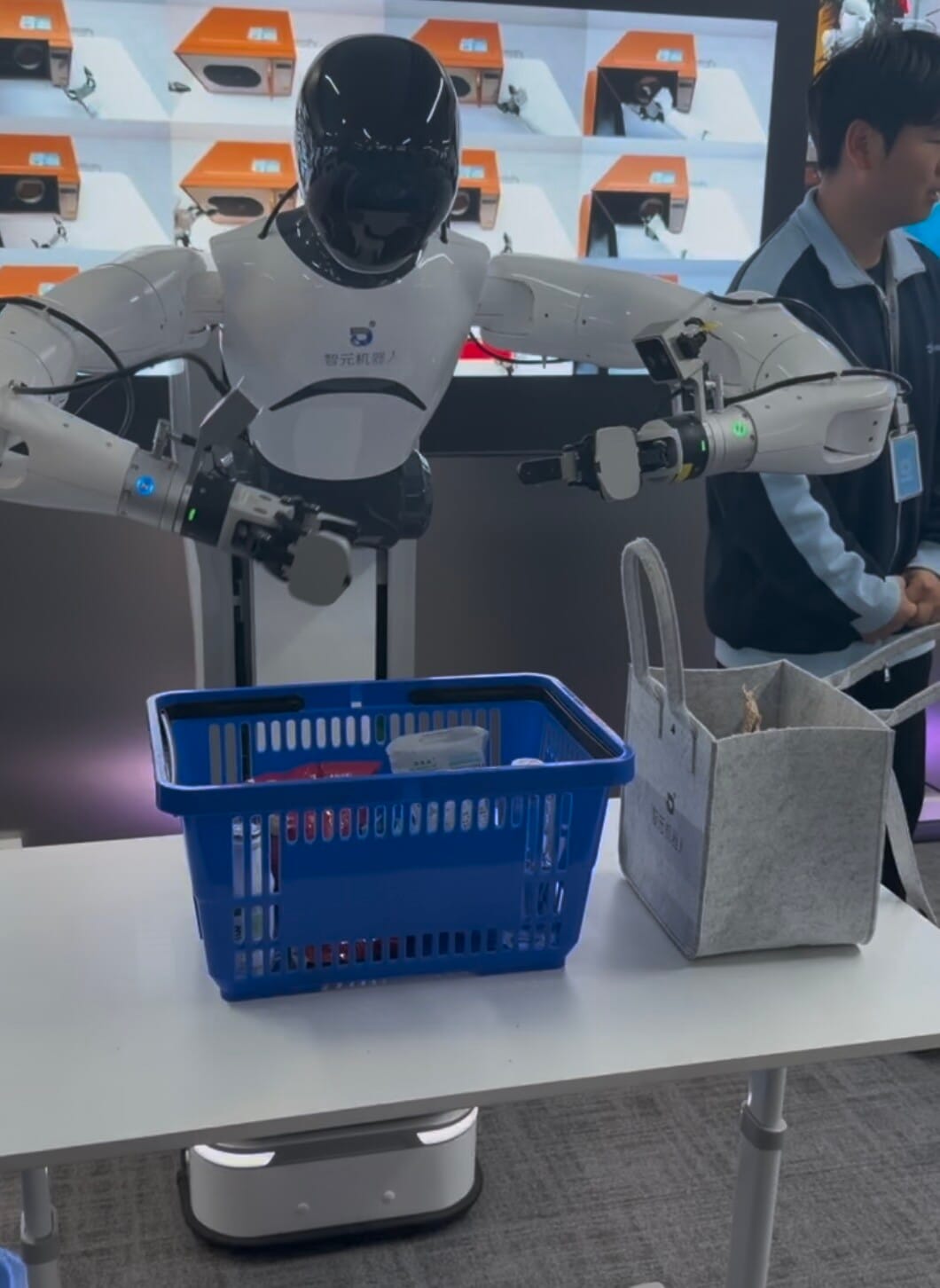
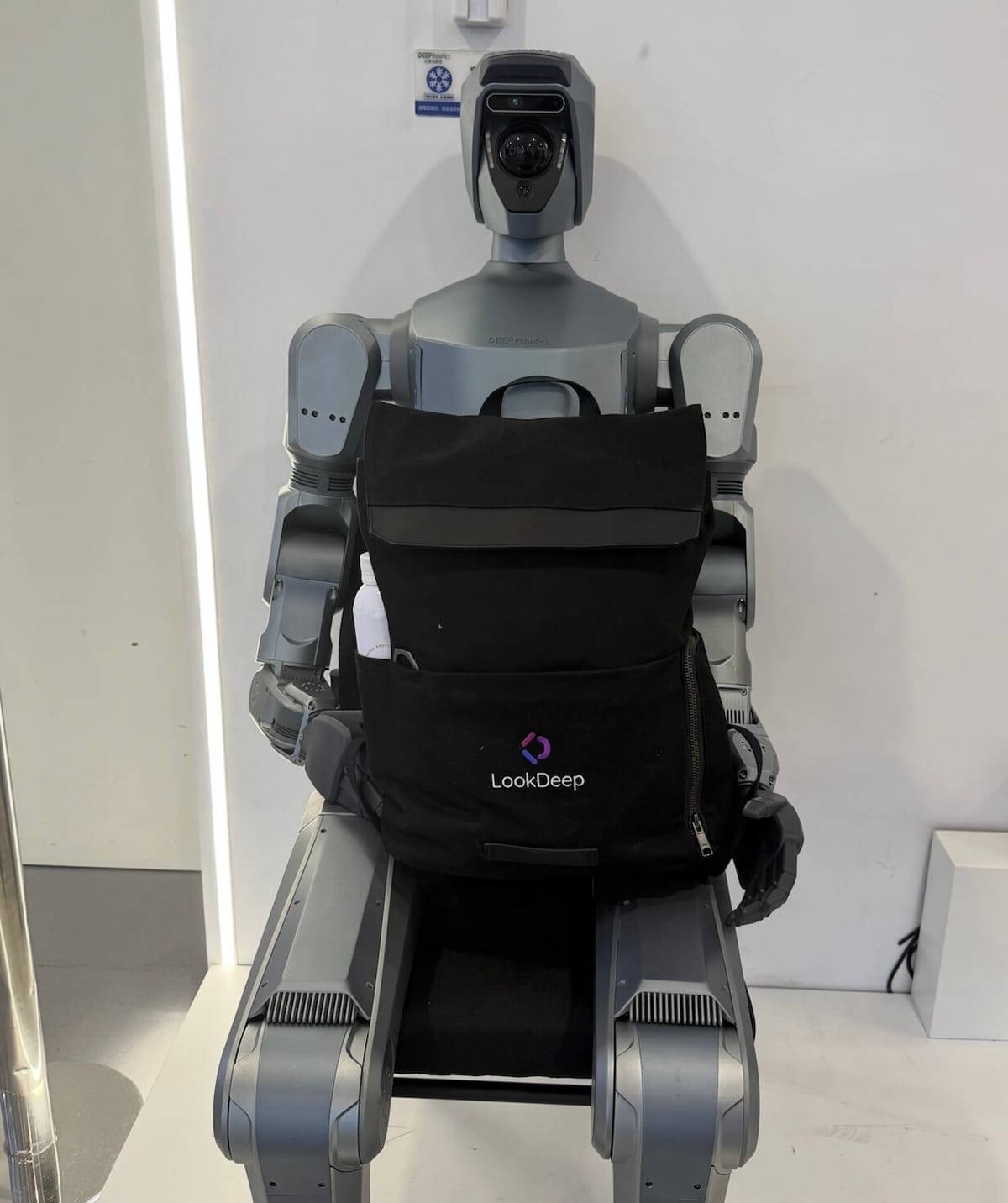
The actuators, the warm-to-the-touch “skin,” the pressure-sensitive hands, the fluidity of movement — even tier-three companies had shockingly good hardware.
Dog robots were especially fun. Teleoperating them makes you feel like a kid controlling a giant, obedient metal puppy.
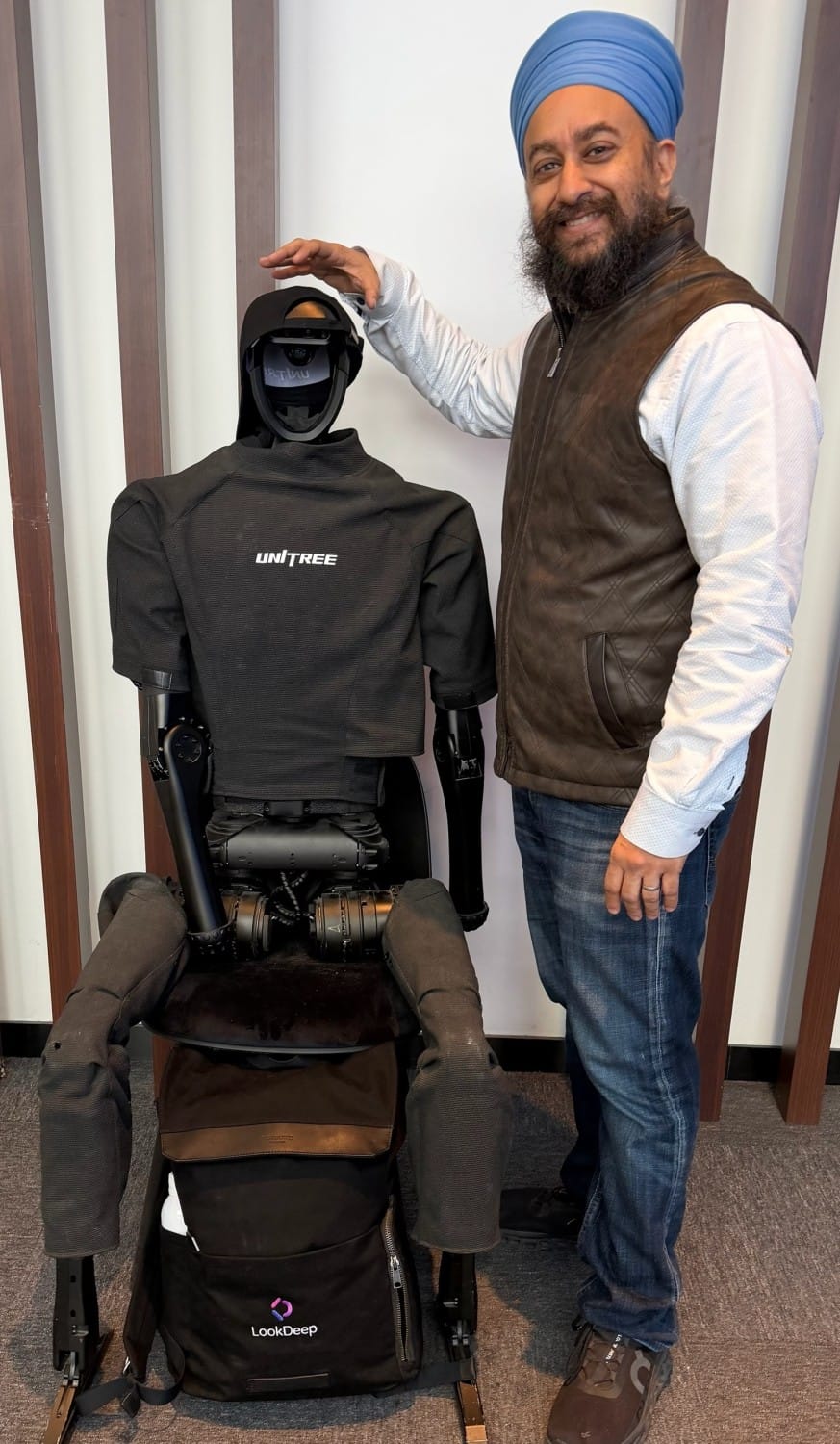
Humanoids? Not so simple. There’s no “open door” button in the teleop interface. It feels like a bigger version of a toy vs an advanced technology.
Universities are getting these robots in China partly to help accelerate the software gap — because the hardware teams alone aren’t closing it.
And that’s why the MindOn video was so startling: it showcased capabilities far beyond anything Unitree itself has demonstrated with the same hardware. (Anyone who’s ever tried to actually program or teleop a Unitree will understand.)
Where Are the Software People?
Here’s a theory someone shared: The “best minds” are flocking to EVs and self-driving — massive industries with massive stakes. China sold 11M EVs last year — 2/3 of global sales.
Humanoids? Maybe 10,000 units.
So the software leadership — the perception, planning, advanced vision talent — is disproportionately consumed by the EV race.
In the US, if we had hardware this capable, we’d have a dozen MindOns for every Unitree. But China’s internal competition + specialization constraints = uneven progress.
At the same time, this is a flashing neon sign to Chinese companies: open your platforms, drop the developer fees, let the ecosystem grow.
Startup Energy Is Universal
Messy desks. Broken prototypes. Improvised testing rigs. Engineers who want to rebuild something immediately because a conversation sparked a new idea.
You can see it through language and culture. You quickly forgot the registrations, internet you needed a specialized VPN to work around, etc and can picture yourself working on problems together. I wish this was part of our path forward with China - competitors in some domains, allies in others, with a shared ethos of invention.
For all the geopolitical tension, I kept thinking: This feels like 2010 — when the US and China’s tech worlds were still curious about each other. Familiar. Energizing. Human.
Leverage & Collaboration — Humanoids as the Spark, Not the Boom?
At a certain point on the trip, I caught myself drifting into those goofy “1,000 ducks vs. one giant gorilla” mental simulations about the U.S. and China. In some alternate geopolitical timeline, the two countries would be peanut butter and chocolate (equals Reese’s Cup !) -different flavors, but together unbeatable.
But that’s not the world we live in right now. And even in this world, I still want the U.S. to win the AI race. Clearly, decisively, no asterisks. Friend or foe, I’d like us ahead.
What surprised me is that this belief didn’t push me toward isolation — it pushed me toward more understanding. Ignoring China, or pretending they don’t exist in robotics, is a strategy for people who enjoy being blindsided.
If the U.S. tries to build the “Apple of robots,” that’s fine. But I’d much rather stand on top of a global “Android ecosystem” — open, messy, distributed, and accelerating like crazy — than spend a decade convincing ourselves the elegant walled garden is almost ready. One thing America is actually good at is letting early-stage capital chase every possible path. That chaos often works. And it should here too.
And that’s just the macro view. Downstream, where people like me actually have to use this stuff, the lens looks very different. Narratives dont matter, I just want to know is it real, is it cost effective, can I revolutionize my market with it.
DeepSeek is a great analogy here. I’ve never used it in any company I’m involved with. But its existence was a moment — a proof that inference could be cheap, edge-capable, and good enough. That freed me to use more expensive frontier models without worry, because I knew success would not price is out of the market.
The same is happening in robotics. You don’t need to wait for the “final form” of a humanoid. You don’t need a domestic stack that does it all. Over time I think we will also learn you don’t need a robot with a head, or a robot with five-fingered hands, or a robot that looks like it stepped out of a Marvel movie.
There are hundreds of thousands of robots already deployed in China — in coffee chains, tea shops, hotels, malls, residential complexes. Proven hardware. Cheap hardware. Hardware that doesn’t require you to imagine the future — because it’s already delivering boba and room service.
And as much as we’re all enamored with the human form (myself included), it’s not obvious it will be the dominant form. Wheels might win in 80% of cases. Hands are overkill for half the tasks we fantasize about automating. A head is mostly for our comfort, not functionality.
Closing Thoughts
We’re early. Very early. This is the bridge moment where AI leaves the screen and enters the physical world — a world with very different rules.
It’s messy, uneven, surprising, and sometimes magical. This trip helped me see the strengths and gaps on both sides. If you have thoughts or counter-opinions, I’d genuinely love to hear them as I try to understand both the tech and the society around it more fully.
Acknowledgments
In preparing for this trip, I pulled from a pretty eclectic set of sources. I got a ton of value from about half a dozen of #DwarkeshPodcast (direct and indirect) on China. I also worked my way through some less interesting but more well-known takes ranging from Ezra Klein to Fox News. And whatever my conversations with Gemini, Claude, and ChatGPT decided to throw at me that day. I also loved following the posts of Chris Paxton (who I’ve never met, but whose feeds were genuinely useful) and sharing perspectives and jabs with Taylor Hou Afik Cohen David Reshef Karthik Ardhanareeswaran along the way.
But mostly, I want to thank the @houmanoids team.
Getting access to the insides of so many companies, having someone willing to translate, push, prod, offer actual opinions (and then change them), give both local and American context, and generally act as guides through all the nuance — that made this trip invaluable. Being able to bang up their robots and even drive them around the streets of Shanghai was both memorable and extremely helpful in understanding real capabilities vs. demos. Thank You.